Does the Future of Computing lie in Chemistry?
Lecture by Dr. Albert S. Y. Wong (University of Twente, Faculty of Science and Technology, Department of Molecules and Materials)
Event details from: Does the Future of Computing lie in Chemistry?
- Date
- 24 March 2026
- Time
- 15:00
- Room
- D1.111
Venue
Room D1.111
Speaker
Dr. Albert S. Y. Wong (University of Twente, Faculty of Science and Technology, Department of Molecules and Materials)
Seminar abstract
I am fascinated with the idea that chemistry could provide a new way to compute. Artificial Intelligence, however useful, marks the end of an era: This type of computation simply requires too much energy and is therefore unsustainable. Realizing that computation is not exclusive to silicon, my research lab aims to create alternative technologies to mimic the dynamical character of the human brain. Specifically, we pioneered how so-called chemical reaction networks (CRNs) can become capable of memory,1molecular information processing,2 and—more generally—computing.3 Furthermore, we developed a fundamentally new approach to characterized CRNs, integrating methods in systems chemistry with graph theory.4 Overall, we explore new computing paradigms outside the conventional logic realm and I look forward to show, and discuss with you, the work carried out my team (comprising PhDs with backgrounds in chemistry, physics, mathematics, engineering).
Selected publication(s):
- Kriukov, D. V.; Koyuncu, A. H.; Wong, A. S. Y.* History dependence in a chemical reaction network enables dynamic switching. Small 2022, 18, 2107523, 1-7.
- Koyuncu, A. H.; Movilli, J.; Sahin, S.; Kriukov, D. V.; Huskens, J.;* Wong, A. S. Y.* Polylysine-coated surfaces drive competition in chemical reaction networkst to enable molecular information processing. ChemSystemsChem 2023, 6, e20230003, 1-7.
- Kriukov, D. V.; Huskens, J.; Wong, A. S. Y.* Exploring the Programmability of Autocatalytic Chemical Reaction Networks. Nat. Commun. 2024, 15, 8289.
- da Cunha, E. F.#; Kraakman, Y. J.#; Kriukov, D. V.; van Poppel, T.; Stegehuis, C.*; Wong A. S. Y.* Identify structures underlying out-of-equilibrium reaction networks with random graph analysis. Chem. Sci. 2025, 16, 3099 - 3106.
If you wish to meet with Dr. Wong before or after the lecture, please reach out to Alberto Pérez de Alba Ortíz (A.PerezdeAlbaOrtiz@uva.nl).
Bio
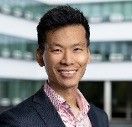
Albert Wong is started his independent research group at the University of Twente in 2020 and is appointed as associate professor in 2024. He received his MSc (2013) and PhD degree (2017, cum laude) from the Radboud University in the Netherlands. He developed strategies for the de novo synthesis of enzymatic reaction networks in the group of Prof. Dr. Wilhelm Huck. In 2017, he received a NWO Rubicon Fellowship and worked on his postdoctoral research worked with Prof. Dr. George Whitesides at Harvard University while he, simultaneously, participated in an interdisciplinary DARPA Molecular Informatics program in Washington.
For more information, please visit: https://www.utwente.nl/en/tnw/crn/