A realistic view on hydrogen in a climate-neutral Europe
Multi-model analysis reveals limited short-term relevance
6 November 2026
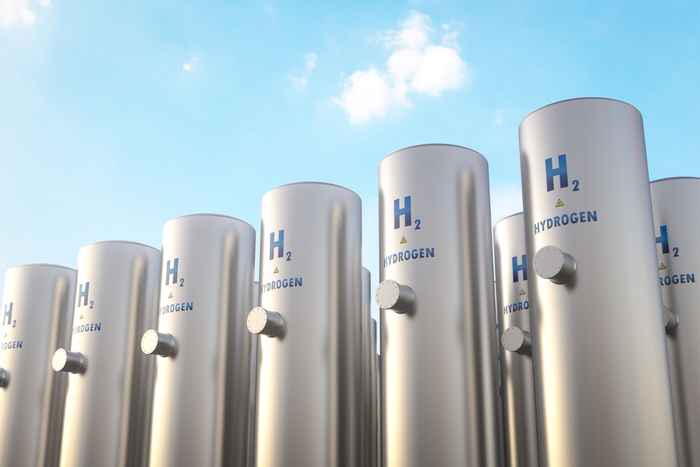
Although many projections on the role of hydrogen for a future ‘green economy’ have seen the light, there has been little systematic research, using multiple integrated assessment models with a dedicated focus on hydrogen. The study now published in Nature Communications combines eight techno-economic analysis models to clarify the system-wide diffusion of hydrogen - including both its direct and indirect uses – according to five relevant policy scenarios.
The added value of the study is that it presents robust conclusions about hydrogen uptake across different model families and formulations under a harmonised scenario design. It addresses ranges across modelling frameworks, aggregates sectoral hydrogen flows, and provides robust, policy-relevant insights into the EU pathway to midcentury decarbonisation.
The results show that for the analysed net-zero scenarios, the hydrogen uptake projected for 2050 ranges from 1-14% of final energy consumption, with an average of 7%. This will be primarily in industry and for synthetic fuel production. The study reveals that hydrogen will contribute minimally to electricity generation, and its direct use in transport and buildings remains limited.
Concern about the feasibility of current policy ambitions.

For 2030, the projected hydrogen adoption remains below 2% (or 7 million tonnes). This is far below the European Union’s 2030 target of 20 million tonnes of green hydrogen from domestic production and imports. Since none of the models consistently predicts achievement of this REPowerEU target, the researchers raise concern about the feasibility of current policy ambitions.
The REPowerEU target for 2030 is unlikely to be met without either substantial technological breakthroughs, cost reductions, or highly coordinated and targeted policy interventions, they write. As Van der Zwaan puts it: “For the coming decade and a half it can’t be expected that hydrogen will become widespread in industry, electricity generation, transport, or buildings. But it is important that we prepare the technology and continue to develop it over the next two decades so that hydrogen can make a significant contribution to a clean energy system around 2050—and beyond.”
The paper also carries a warning regarding hard-to-abate sectors, particularly iron and steel production, for which a substantial share of existing assets and productive capacities is expected to retire around 2035. Ensuring that replacement capacity is hydrogen-ready is essential to avoid carbon-intensive lock-in and unnecessary reinvestment. In parallel, prioritising new or relocated production capacity in regions with abundant renewable energy resources could reduce future hydrogen transport costs and facilitate a smoother scale-up once technological maturity is achieved.
Paper details
Fattahi, A., van der Linden, M., Dalla Longa, F., Van der Zwaan, B,. et al: A multi-model analysis of hydrogen uptake in a climate-neutral Europe. Nat Commun (2026). DOI: 10.1038/s41467-026-78681-9