Rajamani Krishna ranks among world's highly cited chemists
15 November 2022
Each year, Clarivate identifies the world’s most influential researchers - those who have been most frequently cited by their peers over the last decade. The methodology draws on data from the Web of Science citation index, together with analysis performed by bibliometric experts and data scientists at the Institute for Scientific Information (ISI) at Clarivate. In 2022, a total of 6,938 researchers were listed, of which 270 researchers in the Chemistry category. In this category three researchers are based in the Netherlands. Accompanying Prof. Krishna are Nobel laureate Prof. Ben Feringa from the University of Groningen and Prof. Marc Koper from Leiden University. With a total of 210 highly cited researchers, the Netherlands features at the seventh place in the top-10 of countries with the highest number of highly cited researchers.
Improving process technologies with molecular insights
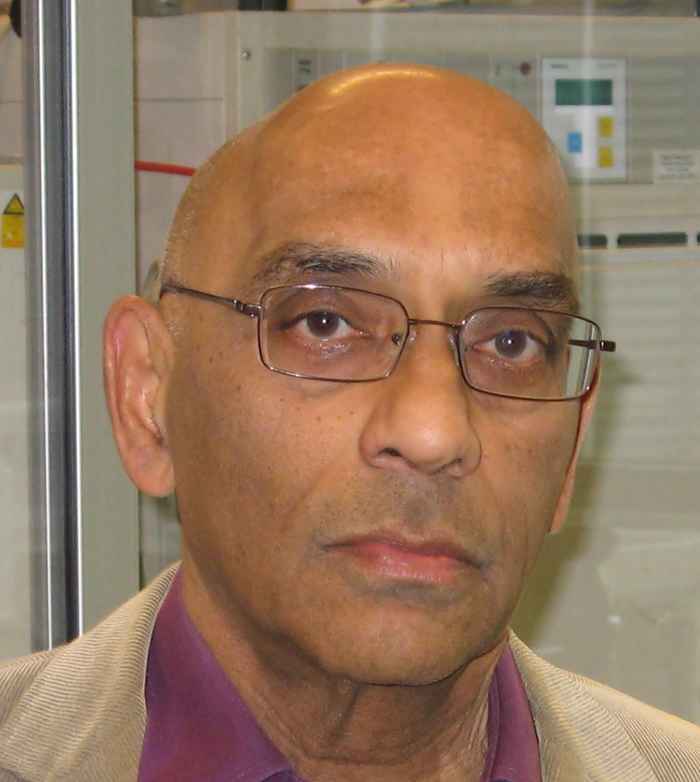
Throughout his career, Rajamani Krishna has focused on improving technologies related to reaction and separation by means of investigating physico-chemical phenomena at the molecular and microscopic levels. One of the key aspects of his research is the development of unifying concepts in multicomponent diffusion and multiphase hydrodynamics, both in separations and reaction engineering. It has provided many improvements in technologies concerning distillation, recovery of oil from shale, fluidized catalytic cracking, catalytic reforming, hydroprocessing, and hydrocracking. In recent years, Krishna has contributed to many research projects in the field of metal-organic framework (MOF) separations, especially with his mathematical modelling of the separation performance.
Krishna has published two textbooks of which one has been translated into Chinese, has more than 500 peer-reviewed journal articles, and holds several patents. According to the latest statistics on Google scholar, his publications have been cited almost 60.000 times, with an h-index of 126. Krishna has received several awards for his scientific contributions, including the Akzo Nobel Science Award in 1997, and the prestigious ENI award in 2013.
See also
- Clarivate announcement of the 2022 list of highly cited researchers
- The 2022 Highly Cited Researchers list
- YouTube contains several highlights of professor Krishna's research