How to find the best electrode for electrocarboxylation reactions
30 November 2023
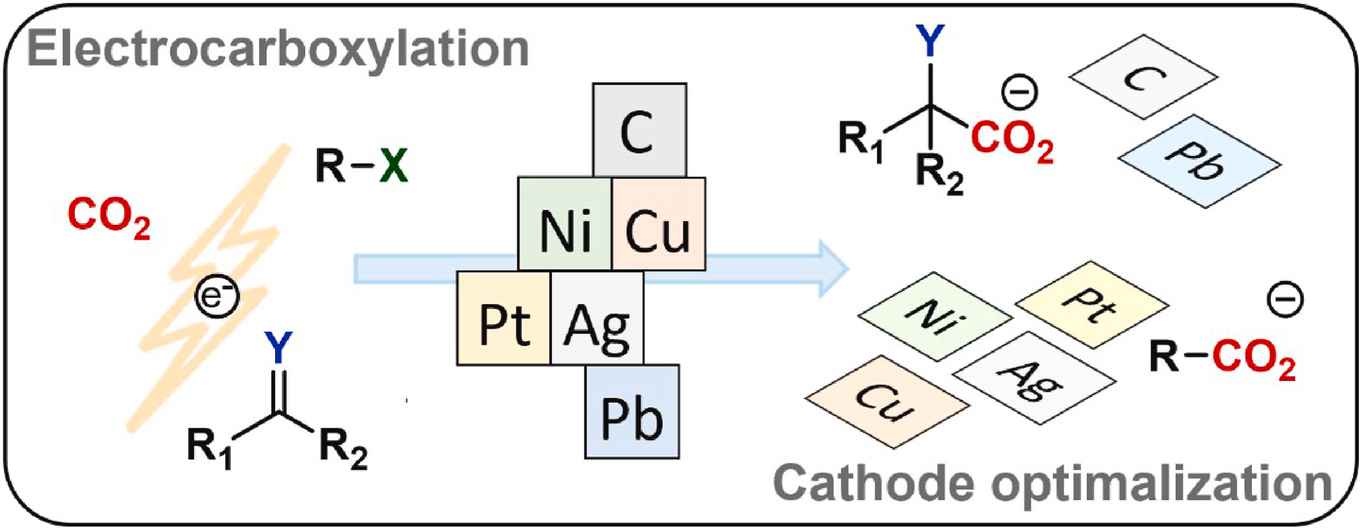
Since the method of operation of electrochemical reactions determines the unique properties of the reaction as well as the end product, the paper describes how different electron transfer modes directly impact reaction kinetics, thermodynamics, and product yield. It describes how inner sphere electrodes like Pt, Ag and Ni may enhance reactions that need stabilization of intermediates via bond formation. The authors advise to choose carbon as electrodes for outer sphere electron transfer; it enhances substrate radical formation in the free form.
Abstract of the paper
Electrocarboxylation reactions hold significant promise as a sustainable and efficient method for carbon-carbon bond formation driven by electricity enabling the direct conversion of carbon dioxide (CO2) into valuable organic compounds. Despite the potential and advantages of electrocarboxylation reactions over traditional methods, there are still challenges to address for their widespread implementation. In this contribution, our objective is to shed light on the role of these reactions in recycling and converting CO2 into valuable chemicals. Specifically, we focus on exploring potential correlations between the performance of CO2-based carboxylation and the choice of working electrode material in combination with the functional groups present in the substrates.
Paper details
Didjay F. Bruggeman, Charlotte Graefin von Quadt, Cássia S. Santana, Amanda C. Garcia: Enhancing electrocarboxylation reactions efficiency by cathode material selection. Current Research in Green and Sustainable Chemistry, Volume 7, 2023, 100380 DOI: 10.1016/j.crgsc.2023.100380.
See also
Research group Heterogeneous Catalysis and Sustainable Chemistry