Bob Pirok receives LCGC Emerging Leader award
"Education is central to how I approach research"
9 February 2026
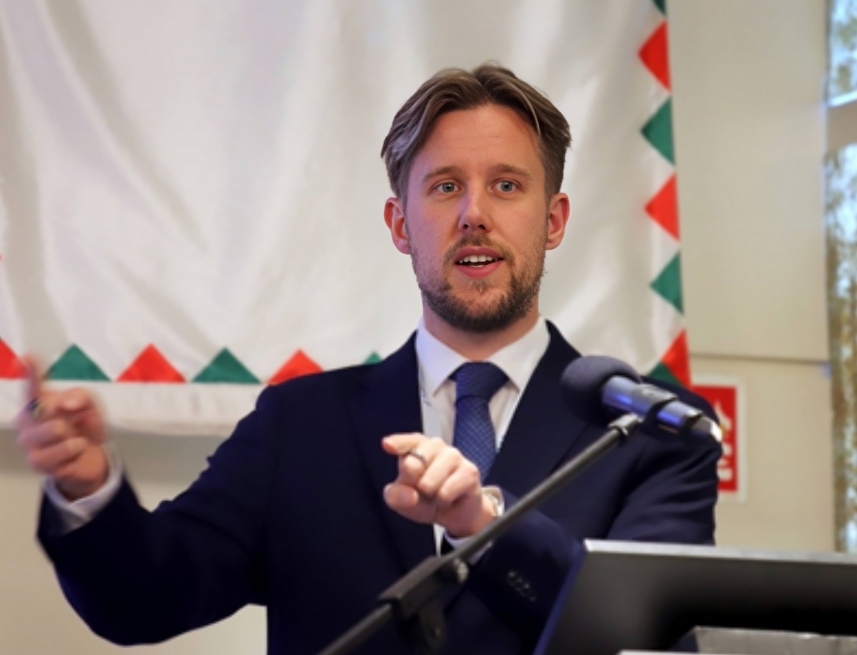
With the Emerging Leader in Chromatography Award, LGCG International recognises the achievements and aspirations of talented early-career separation scientists who have made strides toward the advancement and applications of chromatography techniques. Pirok is honoured for his work in the development of comprehensive two-dimensional liquid chromatography (LC×LC), automated method development, and chemometric data analysis.
Already in his early career, Pirok has emerged as a prominent figure in addressing long-standing challenges in LC×LC, which include method complexity, data interpretation, and experimental optimisation. His research is characterised by close interaction between theory, instrumentation, and application, as well as sustained collaboration with academic and industrial partners. On a mission to transform advanced chromatographic techniques into practical and robust analytical tools, Pirok has authored or co-authored more than 50 peer-reviewed publications and established an internationally visible research program at the interface of separation science, statistics, and artificial intelligence. All this within a few years of receiving his PhD in 2019.
Automated method development
Central to Pirok’s research is the novel modular AutoLC platform, which enables prototype automated method development. With a capacity to run unsupervised (i.e. without human input), it is able to tackle samples of unknown composition by autonomous analysis of (2D-)LC(-MS) data. It is flexible, able to support different optimization strategies and capable of integrating tools developed by scientists in the global chromatographic community.
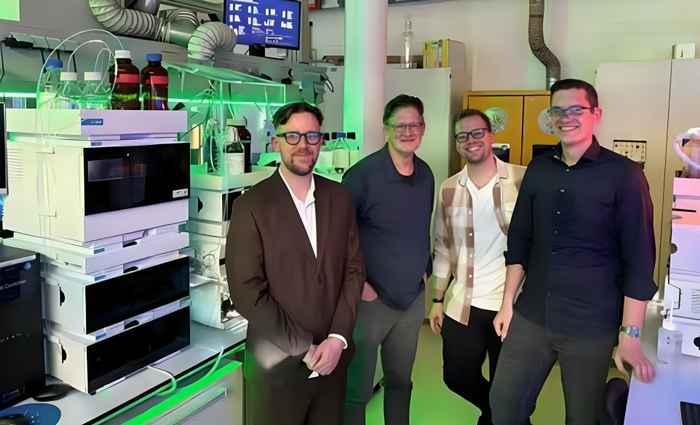
Accessibility and sustainability are key motivations behind AutoLC, says Pirok: “State-of-the-art separation technology is often overly sophisticated. We aim to make it more robust, automated, and usable beyond a small group of specialists, as efficiently as possible. By providing more detailed and reliable molecular information, such technologies can better inform molecular design and accelerate the development of new materials and applications.”
He is especially grateful to his students who continuously challenge assumptions and push the technology further. “They show why research and education belong together”, he says. “In fact, education is central to how I approach research. Many of the ideas behind AutoLC grew directly from discussions with students, in the lab, in courses, or while trying to explain complex concepts in a clear and accessible way. Seeing students grow into independent scientists, capable of questioning methods and building new ones, is one of the most rewarding aspects of my work.”