MBO students visit UvA for a masterclass on electrolysers
Merging scientific research and practical application makes theory come to life
21 March 2026
The Masterclass was organised by Dr Stefania Grecea, who combines her research into Functional Materials with educational development and educator professionalisation in chemistry. An important subject is training the workforce for a sustainable future where hydrogen production and chemical conversions are driven by green electricity. As part of the educational programme of Amcel (the Amsterdam Centre for Electrochemistry), Grecea explores how to develop effective educational modules together with colleagues in other educational institutions and industry.
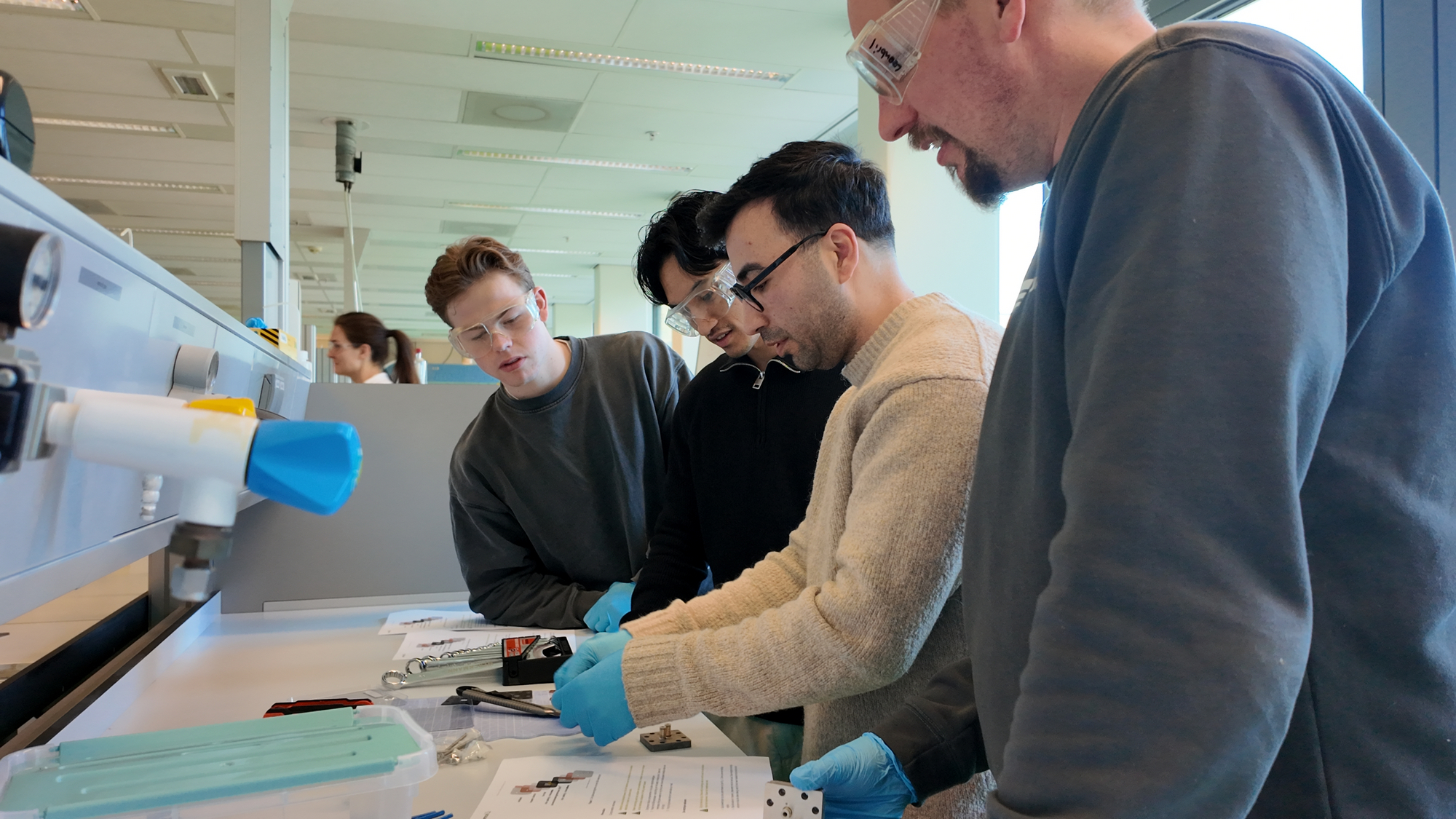
The Masterclass How to build an electrolyser? of last Wednesday is an example of such a module. It was developed in collaboration with Dr Marie Brands from Elexel, an independent electrolyser testing and scale-up service company. Brands led the Masterclass together with Dr Catriona James, a postdoctoral researcher in Grecea’s group.
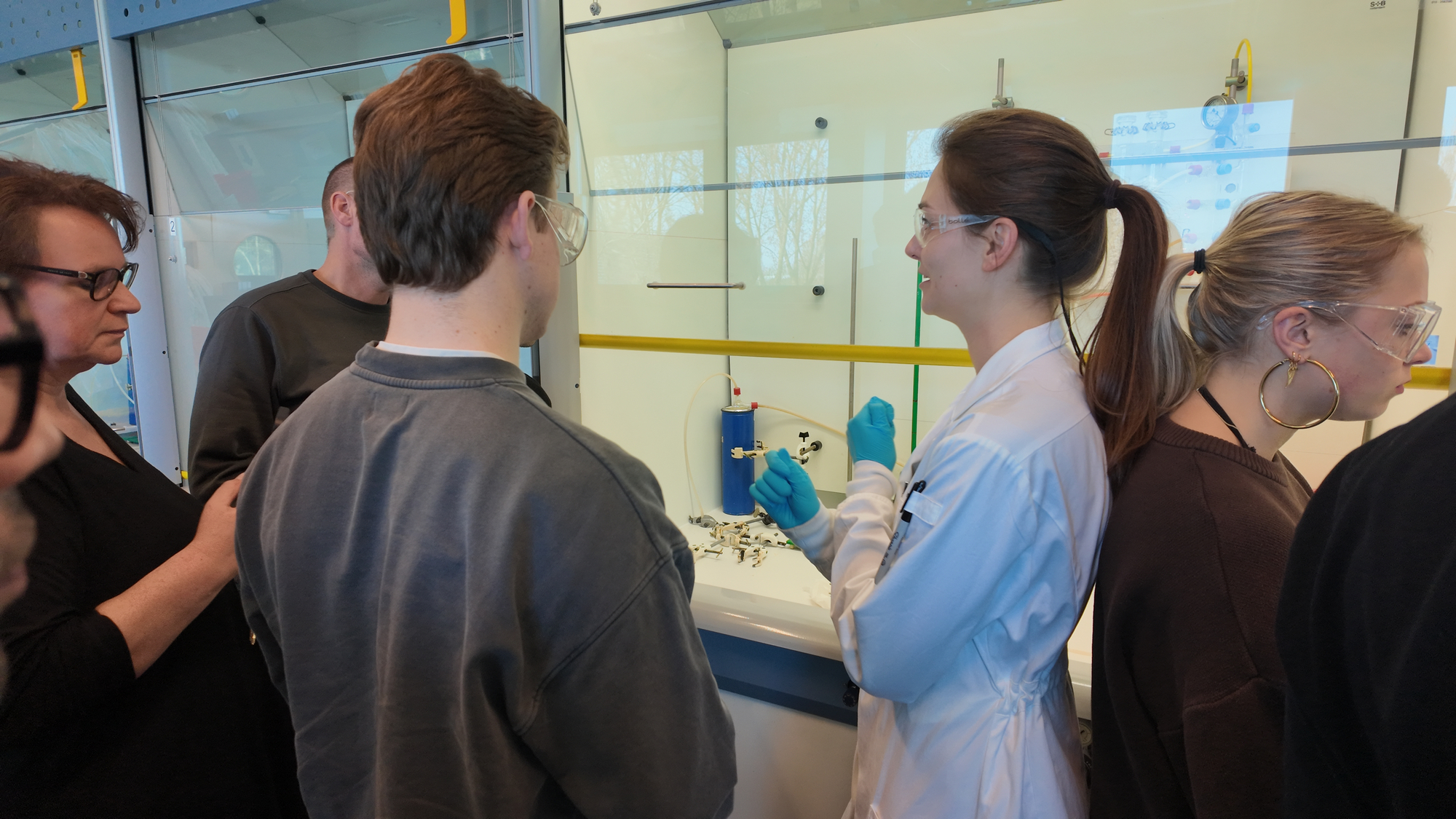
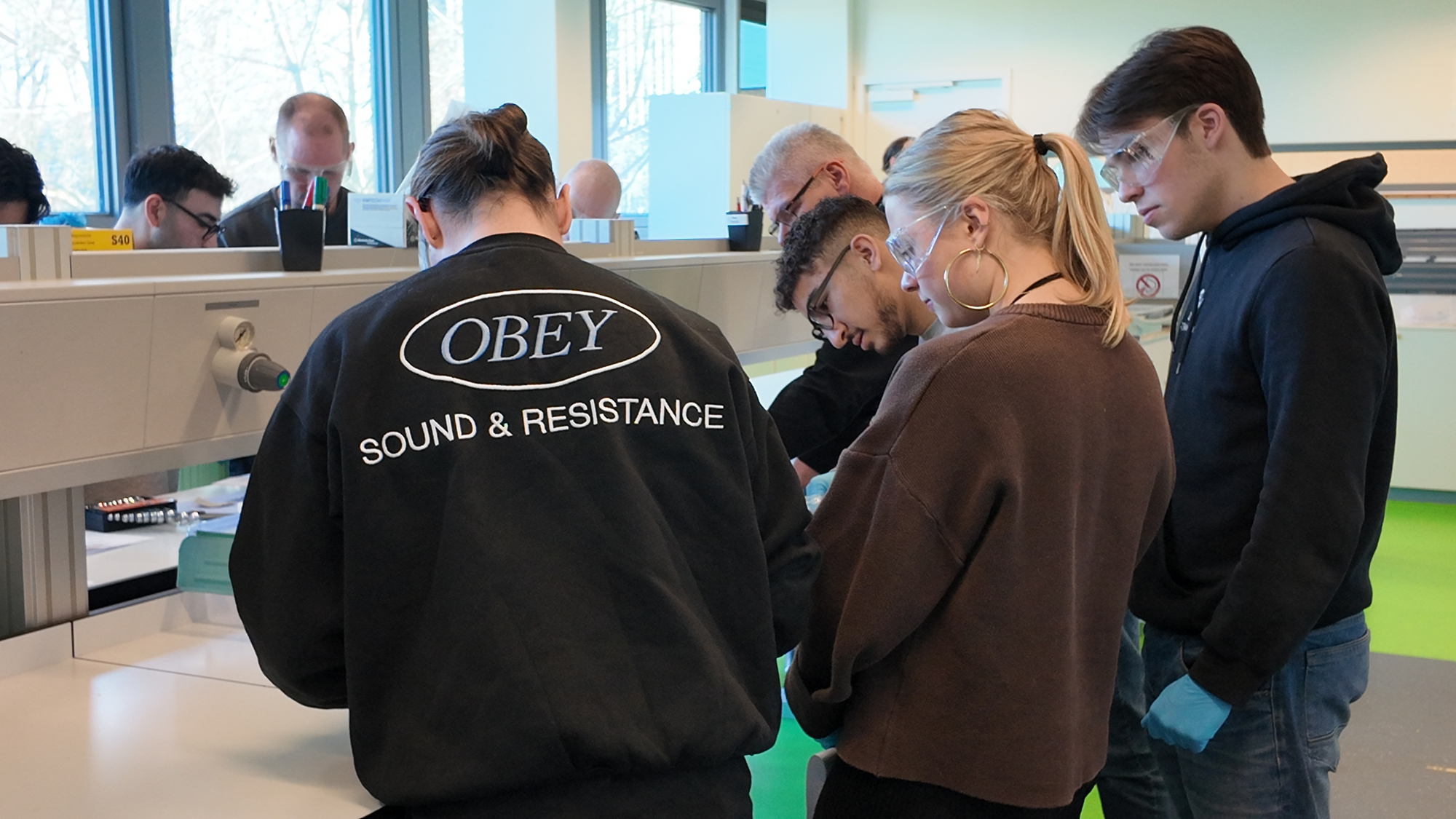
Merging scientific research and practical application, the Masterclass makes theory come to life. The vocational MBO students, who all follow their training in the field of hydrogen, are introduced to relevant scientific developments. The students gain practical experience on electrolysis and the role it plays in the energy transition. And, through their practical questions and helpful tips, they inspire and enlighten scientists and educators as well.
Challenges and opportunities
To Monica Leuring, manager at MBO College Hilversum (part of ROC van Amsterdam), these partnerships demonstrate how her college is developing forward-looking technical education that prepares students for the challenges of tomorrow.
Grecea adds that the hydrogen transition is not just a challenge; it also offers an opportunity. “At Amcel, our students, researchers and professionals work together to bridge the gap between innovative research and practice. Together they build careers, startups, and solutions that truly matter.” She points out that by working on practical projects, collaborating with each other and industry, and exploring new ideas, students and researchers become innovators. “They gain the skills needed to start new businesses, contribute to emerging industries, and turn ideas into impact.”