Tati Fernández Ibáñez receives NWO Open Competition M grant
To develop new efficient catalytic methods building complex molecular ring structures
11 June 2026

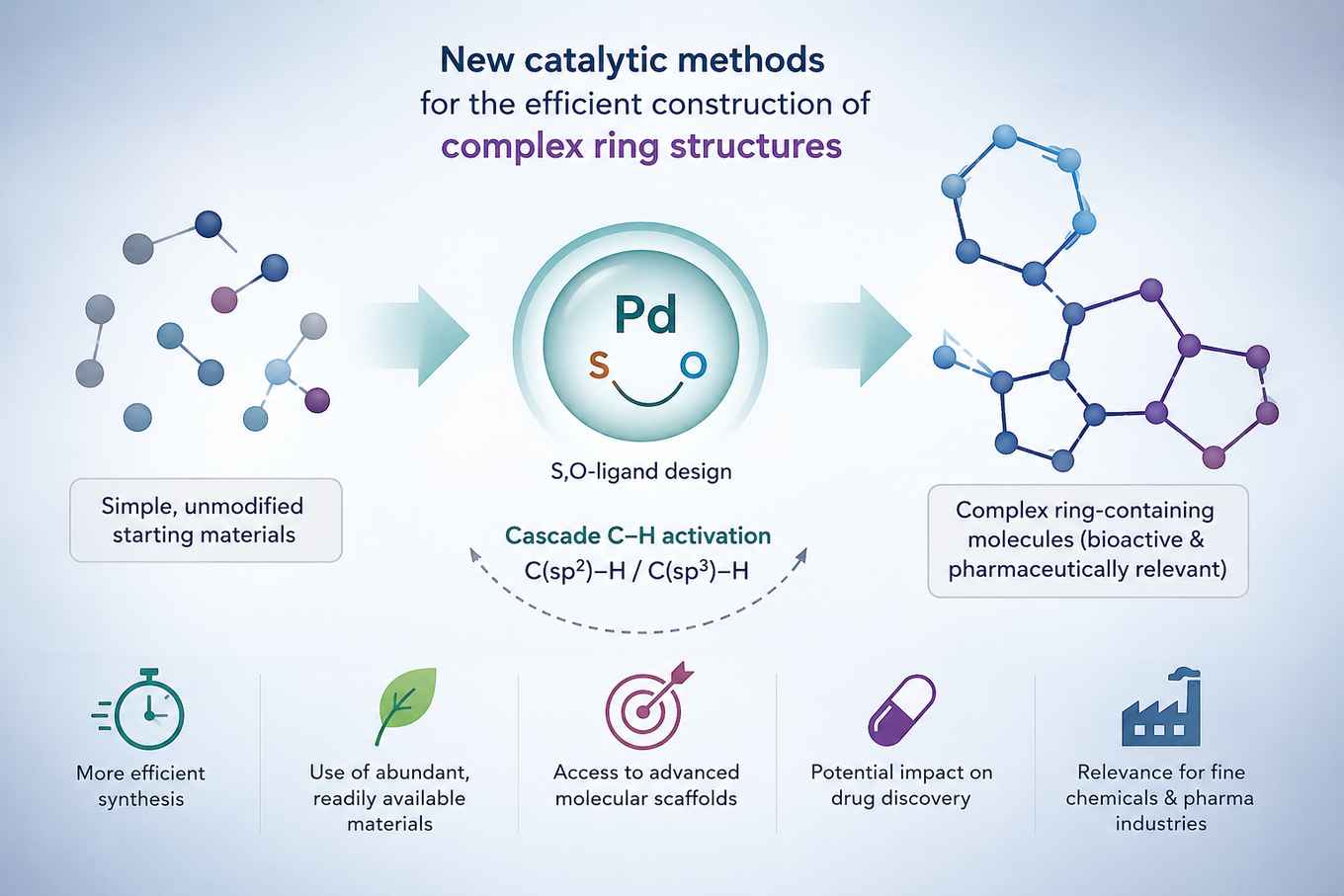
NWO Domain Science M grants are intended for curiosity-driven scientific research with impact. The project focuses on designing innovative approaches to synthesise ring-containing molecules that are commonly found in pharmaceuticals and bioactive compounds. These structures are often difficult and time-consuming to access using conventional methods, which typically require pre-functionalized starting materials.
Dr Fernández Ibáñez aims to overcome this limitation by developing catalytic strategies that directly use simple, unmodified starting materials. This approach is expected to streamline synthesis, improve efficiency, and expand access to advanced molecular scaffolds with potential biological activity, thereby accelerating the discovery of new drug candidates. Beyond its immediate objectives, the methodology may also be applicable to a broader range of synthetic transformations, with potential impact on the future design of catalytic reactions. While primarily curiosity-driven, the research is expected to be of interest to companies in the fine chemicals and pharmaceutical sectors.
Metal-catalysed C-H activation
At the core of the project is metal-catalysed C–H activation, with a particular emphasis on ligand design to enable cascade transformations involving C(sp²)–H and C(sp³)–H bonds. Such transformations remain rare and often require directing groups or pre-functionalised substrates, such as halogenated intermediates.
A key goal of the project is the development of cascade C(sp²)–H/C(sp³)–H activation processes. Achieving this would enable the direct construction of complex molecular architectures in a single step from simple precursors. The research will explore palladium-based catalytic systems in combination with S,O-ligands, an established area of expertise within the Fernández Ibáñez group.