Cooking plastics into oil
UvA pilot plant brings advanced plastic recycling technology closer to industry
2 June 2026
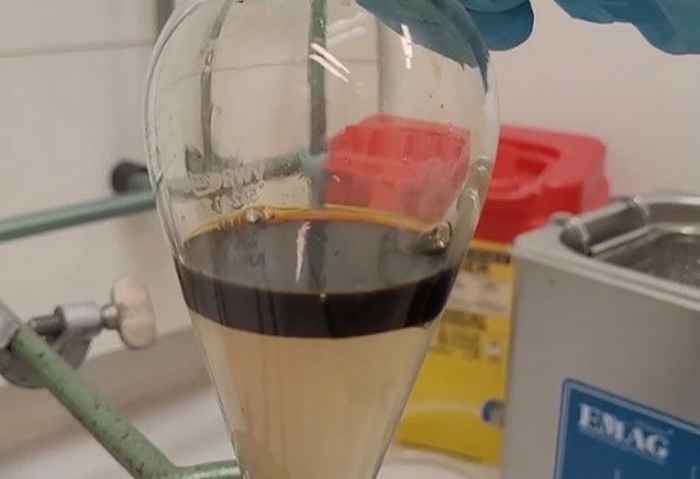
Developed within the European PLASTICE project under the leadership of Associate Professor Dr Shiju Raveendran at UvA's Van 't Hoff Institute for Molecular Sciences, the process of Solvothermal Liquefaction (STL) transforms mixed plastics waste into oil using solvent, heat, catalysts, and elevated pressure. The dark brown oil contains molecules that can be used to produce new, virgin plastics, thus closing the recycling loop.
A key feature of the process is that it devours all types of plastics simultaneously. It thus offers a solution for recycling complex, mixed municipal plastic waste streams. Currently, this waste requires extensive sorting before it can be recycled. In many cases, it is incinerated or ends up in landfills.
Successful lab experiments
The EU-funded PLASTICE research project aims at closing the plastics recycling loop through novel conversion routes. Of a total project budget of almost 20 million euros, Raveendran received over 1,5 million euros for developing the STL process. After extensive laboratory development, it is now entering the crucial demonstration phase at a Technology Readiness Level (TRL) of 6/7 - a key step on the path toward industrial deployment.
Over the past few years, the team has developed and tested novel nanostructured solid catalysts that enable efficient processing of the plastic feedstock. Laboratory experiments have shown that after just 30 minutes of reaction, the process yields three products: gas, oil, and char. The char is then filtered out, the water is recovered and reused, and the oil is separated – clean, ready, and with real potential as a feedstock for new plastics.The laboratory research included kinetic studies, Computational Fluid Dynamics (CFD) modelling, techno-economic analyses, and investigations into the utilisation of process by-products. The results have already been published in leading international journals.
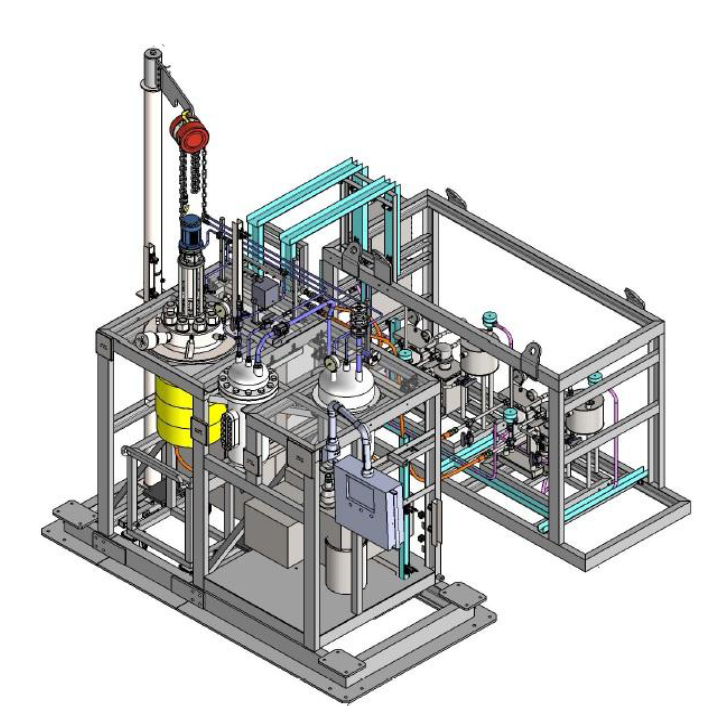
Raveendran: “We have gained a deep insight into the process and are confident that it merits scaling up to industrially relevant volumes. That’s why we have now designed and manufactured a pilot reactor system as a first important step towards actual application.”
25-litre reactor vessel
The system was co-developed together with an Indian engineering partner specialising in industrial process systems. It features a 25-litre reactor vessel, storage tanks, integrated safety systems, and both on-site and remote-control capabilities.
In April, the all-important Factory Acceptance Test was successfully completed in the presence of Raveendran, confirming the pilot is ready for deployment. Comprehensive safety and process assessments, including HAZOP studies, were carried out during development, while the engineering designs received approval from Bureau Veritas.
The installation is currently being assembled into a transportable skid-mounted unit before shipment from India to Spain. It is expected to become operational this summer at the site of PLASTICE partner COGERSA, a public waste management company based in the Asturias region. Together with COGERSA, the UvA researchers will evaluate how the technology performs on “real-life” plastic waste streams. Raveendran is eager to obtain the results: “Our lab experiments already included actual plastic waste, but we will certainly encounter challenges we could not fully foresee. That is precisely the purpose of this scale-up phase - to move the technology toward genuine industrial relevance.”